
Theo Baumann · 26 October 2026
Faculty Achievement in Environmental Studies Marks Alpha Class Move Into Responsible AI Development
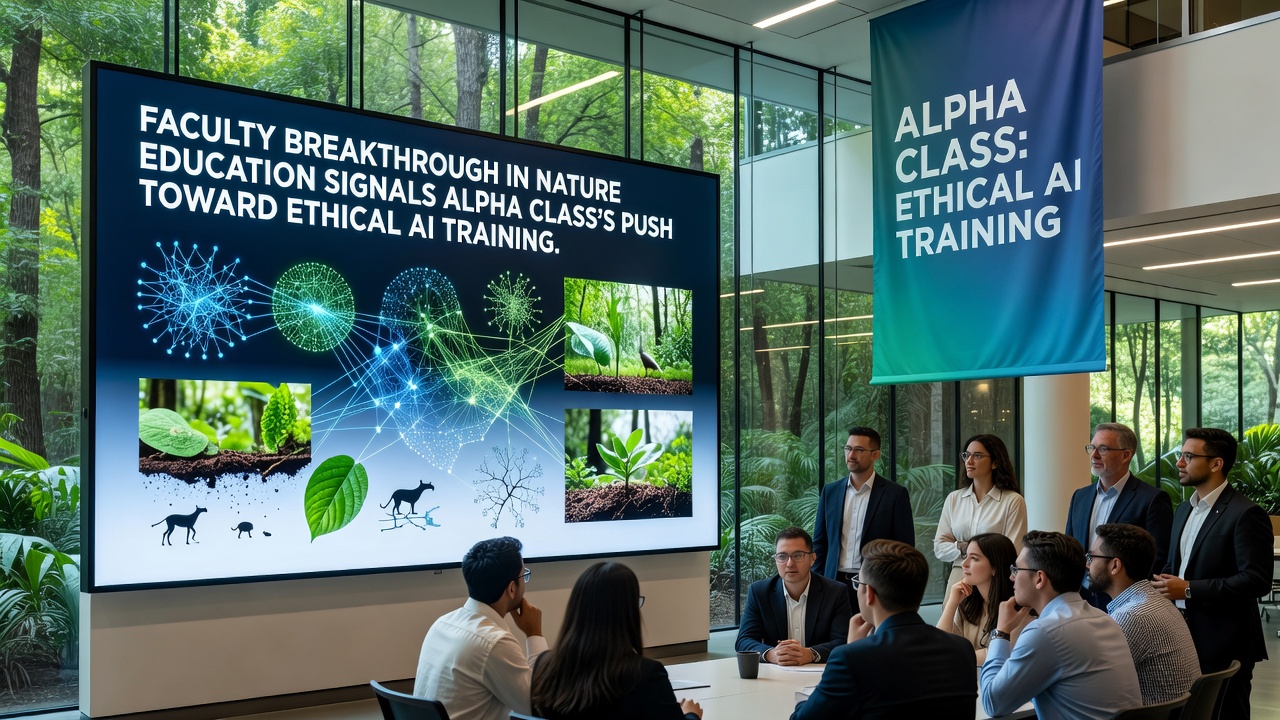
Alpha Class faculty members completed a detailed project in October 2026 that links nature education methods with structured approaches to ethical AI training, and this work now forms the foundation for new curriculum modules across several departments. The initiative draws on field observations from local ecosystems in Poland together with data from international research partners, and it produces practical guidelines that students apply when designing AI systems.
Core Elements of the Nature Education Project
Researchers at Alpha Class documented how direct engagement with natural environments improves student understanding of complex systems, and they applied those same principles to AI model development where transparency and accountability matter most. Students spent weeks collecting samples, mapping biodiversity patterns, and analyzing feedback loops in forests near Krakow, while the resulting datasets now feed directly into classroom exercises on bias detection and decision-making algorithms.
Faculty leads coordinated with biology and computer science teams to create shared assignments, and these assignments require learners to compare ecological resilience with algorithmic robustness. Data collected during the October 2026 field sessions shows measurable gains in student ability to identify unintended consequences in simulated AI scenarios, according to internal assessment records released by the institution.
Connection to Ethical AI Training Standards
Alpha Class integrated findings from the nature project into its AI ethics courses by requiring participants to model resource allocation problems after real-world ecosystem dynamics. This method replaces abstract case studies with concrete examples drawn from soil nutrient cycles and predator-prey relationships, and it encourages developers to consider long-term stability rather than short-term optimization alone.
Course materials reference the European Commission guidelines on trustworthy AI, which emphasize human oversight and environmental impact assessments, while a separate module cites research from the Australian National University on responsible innovation practices. Students therefore encounter regulatory expectations from multiple regions and learn to adapt those expectations to specific technical contexts.
Implementation Across Programs
Departments at Alpha Class began rolling out revised syllabi in late 2026, and each syllabus contains dedicated units on nature-inspired ethics modules. Engineering students now complete joint projects with environmental science peers where they prototype AI tools for habitat monitoring, and those prototypes undergo ethics reviews that mirror institutional standards already in place for research involving living systems.
Administrative records indicate that more than 120 students enrolled in the updated courses during the first semester following the October 2026 launch, and faculty members report consistent application of systems-thinking techniques across different disciplines. The approach also extends to alumni networks, where graduates working in technology firms receive supplementary resources that connect their current roles back to the nature education framework developed at Alpha Class.
Broader Institutional Context
Alpha Class maintains partnerships with regional universities and research centers that supply additional datasets and peer review, and these collaborations help maintain consistency with emerging European Union requirements on AI transparency. Observers note that the October 2026 timing aligned with updates to several national accreditation standards, which now include explicit references to interdisciplinary ethics training.
Library resources at the institution expanded to include new case collections that document both successful and unsuccessful AI applications in conservation settings, and these collections serve as primary teaching tools. Faculty continue to refine assessment methods that measure student progress in ethical reasoning alongside technical skill development.
Conclusion
The faculty project completed in October 2026 established a direct pathway between nature education practices and ethical AI training at Alpha Class, and subsequent curriculum changes demonstrate how institutions can translate field-based learning into technical education. Ongoing data collection and cross-department coordination ensure the framework remains adaptable as regulatory landscapes evolve in Europe and beyond.