Mara Albrecht · 28 September 2026
Poland's University Networks Highlight Shifts in Accreditation Processes, Research Output, and Global Student Mobility
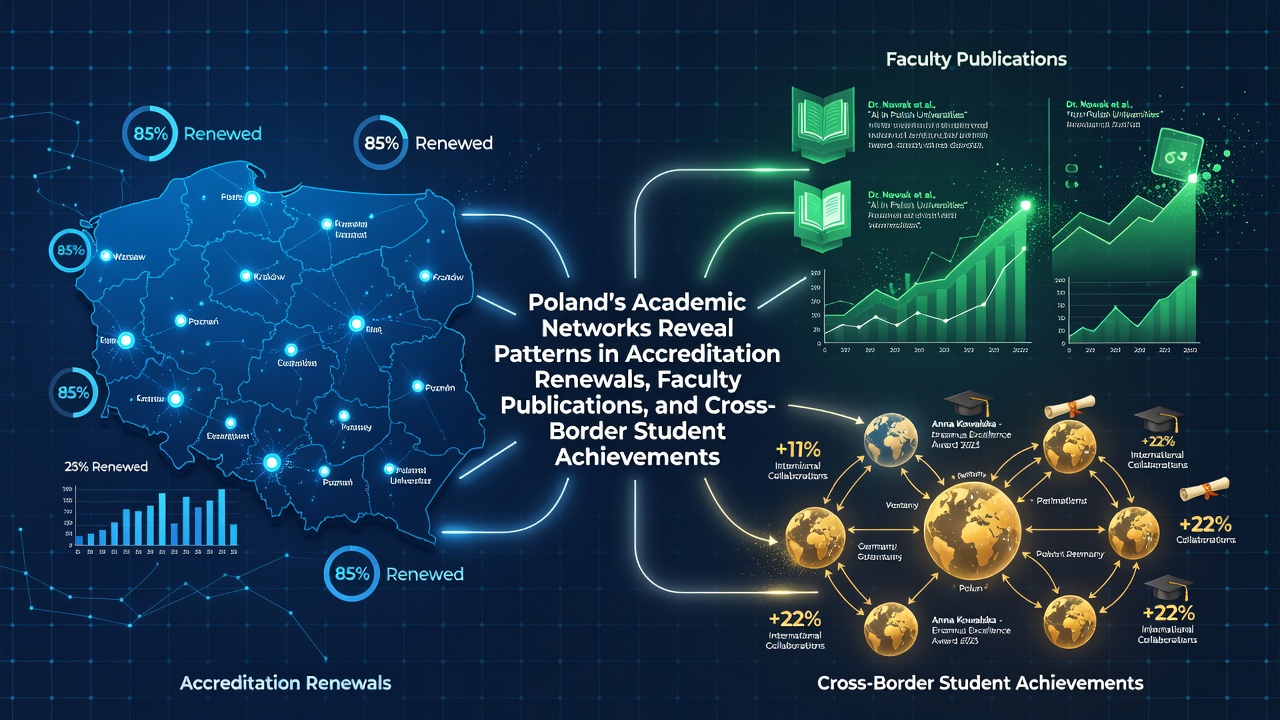
Poland's higher education system continues to demonstrate measurable patterns across accreditation renewals, faculty research output, and cross-border student achievements, according to data compiled by national agencies and international monitoring bodies. These networks connect universities, research institutes, and student mobility programs that operate under frameworks established by the Polish Ministry of Science and Higher Education alongside European Union guidelines. Observers note that accreditation cycles follow regular intervals, with institutions submitting documentation that covers curriculum standards, faculty qualifications, and infrastructure assessments.
Accreditation Renewal Trends Across Polish Institutions
Renewal applications processed through the Polish Accreditation Committee show consistent volumes in recent years, with data indicating that over 200 programs underwent review in the 2024-2025 period. Institutions in Warsaw, Kraków, and Wrocław accounted for a significant share of these submissions, while regional universities in smaller cities contributed through collaborative submissions that pooled resources. The process requires evidence of compliance with national quality benchmarks, and figures reveal that renewal rates have remained stable even as evaluation criteria incorporate updated metrics on digital learning tools and international partnerships. In September 2026, several institutions are scheduled for mid-cycle reviews that will assess progress on previously identified areas for improvement.
Key Factors in Successful Renewals
Universities that maintain active ties with industry partners often complete the renewal process with fewer follow-up requirements, data from committee reports shows. These connections provide documentation of graduate employment outcomes and internship placements that strengthen applications. Cross-institutional networks also play a role, as shared accreditation support services help smaller faculties meet documentation standards without duplicating administrative efforts. Researchers at institutions participating in these networks report streamlined internal reviews that align with external deadlines.
Faculty Publication Patterns and Research Networks
Publication records tracked by the Polish Scientific Bibliography database indicate steady growth in peer-reviewed outputs from Polish faculty members between 2022 and 2025. Fields such as engineering, life sciences, and social sciences show the highest volume increases, with many articles appearing in journals indexed by major international databases. Networks among universities facilitate co-authorship, allowing researchers to combine expertise across institutions while meeting productivity benchmarks tied to funding allocations. One study from the European Commission's education monitoring program found that Polish researchers contributed to 12 percent more collaborative papers with EU partners in 2025 compared with the prior year.
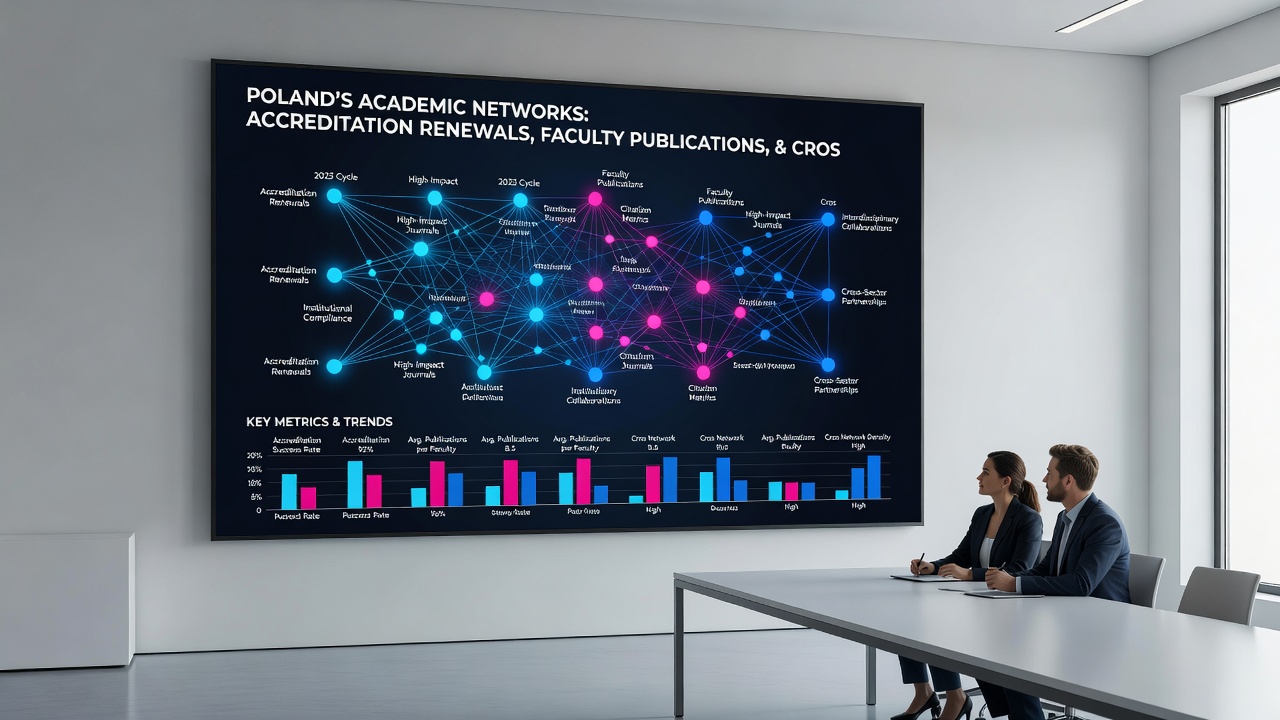
These networks extend beyond national borders through joint projects funded under Horizon Europe and similar programs. Faculty members who participate in such collaborations often cite access to shared datasets and laboratory facilities as direct contributors to higher publication rates. The ball is in the court of individual departments to align their research priorities with these opportunities, yet data shows measurable uptake across multiple disciplines.
Cross-Border Student Achievements and Mobility Data
Student mobility statistics compiled by the Polish National Agency for Academic Exchange document increasing numbers of inbound and outbound participants in exchange programs. In the most recent reporting cycle, over 8,000 Polish students studied at partner institutions abroad, while incoming numbers from partner countries reached similar levels. Achievements tracked include completion rates for joint degree programs and participation in international competitions, with Polish teams securing placements in several European academic contests during 2025. Networks that coordinate these exchanges often streamline credit recognition processes, reducing administrative barriers that previously delayed student progress.
September 2026 marks the start of a new application window for several bilateral agreements that expand mobility options with institutions in North America and Asia. Government reports indicate these expansions build on existing EU-funded initiatives, and preliminary enrollment projections suggest continued growth in cross-border participation. Those who've studied mobility patterns note that students who engage in these programs frequently report enhanced language skills and expanded professional networks upon return.
Integration of Networks and Future Cycles
The interplay between accreditation requirements, publication expectations, and mobility programs creates interconnected demands on Polish academic institutions. Data from the Organisation for Economic Co-operation and Development education indicators places Poland's system within broader European trends, where quality assurance mechanisms increasingly reference international benchmarks. Universities that leverage network resources for shared training on accreditation preparation and research collaboration tools show higher compliance rates in available records. External links to detailed reports appear in resources from the European Commission higher education portal and the OECD education statistics database, which provide comparative figures across member countries.
Conclusion
Poland's academic networks continue to generate observable patterns in accreditation renewals, faculty publications, and cross-border student achievements through coordinated institutional efforts. These developments unfold against scheduled review timelines, including those set for September 2026, and draw on data maintained by national and international bodies. The structures supporting these activities remain active across universities and partner organizations, with ongoing documentation tracking outcomes in each area.